Pathans in our Midst – III
The final part of this series provides a rushed account of the central characters of 300 years of Pathan history in India – from the eighteenth century to the present.

Abdali, Sikhs and Rohillas
The next chapter of the Pathan saga in India was written by Ahmed Shah Abdali. The Abdalis are the most westerly of the Pathan tribes residing in territory close to Persia. Ahmed served in the army of the Persian ruler Nadir Shah. He was a member of the elite corps, the Emperor’s bodyguard, which was comprised largely of soldiers from the Abdali tribe. Nadir Shah was assassinated in 1747. His empire was split – the Eastern part, which included parts of North-West India, fell to the Abdalis. Ahmed Shah, the most able among the Abdalis, was anointed emperor. For most of Afghan history, the lands of Pathans have either been divided between warring tribes or have been ruled by alien powers. For the first time in its history, Afghanistan would be ruled by a Pathan emperor. Abdali assumed the title Durrani (Pearl of pearls) and the Abdali tribe too adopted this name*.
Abdali was a worthy successor to Nadir Shah and matched his bloodlust and marauding ways. Aurangzeb’s death in 1707 had led to a swift decline of the Mughal empire. Abdali raided India eight times between 1748 and 1767, with devastating effect. He secured large tracts of Punjab, including Lahore, from the enfeebled Mughals. He also conquered Kashmir.
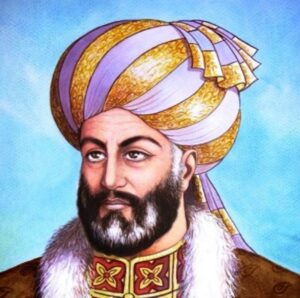
The decline of the Mughals had set up fascinating possibilities on the Indian chessboard of the eighteenth century. Pieces in the game moved quickly and competed fiercely for control of the Indian prize. Marathas, who from the days of Aurangzeb had waged war against the Mughals, appeared to hold the most promise in the game. The stage was set for a clash between two of the fiercest pieces on the board. The Pathans under Ahmed Shah Abdali clashed with the Marathas on the battlefield of Panipat in 1761. It was a closely fought battle with heavy casualties on both sides but Abdali prevailed. Many historians regard this battle as an important turning point in the history of the sub-continent. Maratha fortunes waned and those of another pretender from a far-off land rose. By weakening the most promising Indian player, Abdali may have unwittingly paved the way for the eventual rise of the British.
A Pathan story cannot be complete without an account of their tumultuous relationship with the Sikhs. The tenth Sikh Guru, Guru Gobind Singh, was murdered in 1708 by two Pathan traders, a fact that still rankles with the Sikhs. Ironically, a few years earlier, it was another pair of Pathans who saved the life of the Guru when he escaped after the battle of Chamkaur against the Mughals. They carried him in a curtained palanquin and when questioned, at a Mughal check post, claimed they were ferrying their Pir.
Sikhs had emerged as important players in the feuding chessboard of the eighteenth century. They organized themselves into twelve Misls (confederacies) in 1748 under the leadership of Sikh chieftain Jassa Singh Ahluwalia. These Misls controlled large parts of Punjab. Abdali’s repeated raids, not only weakened Mughal authority, but also brought him into conflict with the Sikhs. The contests were brutal. Sikh bands would harass and loot Abdali’s army as they returned to Afghanistan with plunder from the cities of North India. By the time of Abdali’s fifth invasion Mughal authority had been weakened to the point that the only real opposition he faced was from the Sikhs. No sooner would Abdali return to his homeland that Sikhs would take control of his territories in Punjab, including Lahore. Abdali’s response to constant Sikh harassment was swift and ruthless. He spilled much Sikh blood in these conflicts, the most infamous being the Vaada Ghalugarha (great massacre) in 1762, in which it is estimated anywhere between 12,000 to 30,000 Sikhs, largely women and children, were massacred. He also demolished the holiest temple of the Sikhs, Harmandir Sahib, on three separate occasions but the Sikhs rebuilt it each time.
In 1801, the chief of the Sukerchakia Misl, Ranjit Singh, who had succeeded in uniting many of the Sikh Misls, crowned himself Maharaja of Punjab. Abdali had died in 1772 and his successors proved less able. Ranjit Singh, for much of his thirty-eight year reign, spun a web around Abdali’s grandsons. Three of Abdali’s grandsons, forever warring with each other, held the throne at Kabul at one point or the other, in a game of regal musical chairs. The wily Ranjit Singh played a masterly game in which he employed all means – brute force, diplomacy, intrigue and threats. Ranjit Singh eventually conquered all territories held by the Pathans in North West India – provinces of Peshawar, Multan and Kashmir. With his conquest of Peshawar, he controlled all territory, south of the Hindukush in which Pathans resided. Pathans have seen many foreign conquests up to the present. But it is Sikhshahi, a term coined by Pathans for Sikh rule, that they recall with least favour. Ranjit Singh’s sacking of Peshawar in 1818 is an especially unpleasant memory. Hari Singh Nalwa, the most celebrated of Ranjit Singh’s Generals, was held in great terror by the Pathans. He was ruthless in his dealing with frequent Pathan uprisings against Sikh rule. Pathan women, it is said, would make their children sleep by saying “Go to sleep or Nalwa will come.”
Abdali, however, was not the only Pathan ruler to make an impression in the eighteenth century. The declining Mughal empire would also open up possibilities for Pathan military adventurers who were already resident in India. The Rohillas, were among the powers competing for supremacy in the North along with Sikhs, Marathas, British and the intractable Nawabs of the fading Mughal Empire. Rohilla, a term derived from the Pathan homelands, Roh, was used to describe Pathans settled in Katehr (former name of a fertile region in present day Western Uttar Pradesh). Pathans were to establish the Rohilla kingdom in this region. Contrary to their unruly image, Pathans would display, yet again, a capacity to rule. The Kingdom was a confederacy of Pathan chiefs, the most important being, Ali Muhammad Khan (1725 – 1749), who inherited from his father the career of a local tough whose main job was to employ his muscles to help Mughal nobles in Delhi collect revenues from their jagirs. The local tough would eventually overshadow his patrons and became master of large tracts of present day Western Uttar Pradesh and Uttarakhand.
However, none of the powers of the region – the Mughal emperor, the Nawab of Avadh and the British – were happy with the existence of the Rohilla kingdom. When the Rohilla chief reneged on his commitment to the Nawab of Avadh, the Nawab along with his British allies went to war with the Rohillas in 1774 and defeated them. The Rohilla Kingdom was merged with Avadh. In the chaotic eighteenth-century the Rohilla Kingdom was an oasis of economic prosperity. Trade and agriculture flourished in the kingdom making it one of the most prosperous regions in the country. The Rohillas exploited the extensive Pathan trading networks. Trade with Nepal, Kumaon, Garhwal, Kashmir and Peshawar thrived. They were just as perspicacious in investing in agriculture and revenues from cultivation grew rapidly. James Mill, British utilitarian and historian, writing of the dismal condition of India following the decline of the Mughal Empire, recounted, “It is proved that their (Rohilla) territory was by far the best governed part of India; ……… the people were protected; ………. their Industry was encouraged; and the country flourished beyond parallel ”.
The Revolt and the Independence Movement
The Revolt of 1857 holds a special place in Indian hearts and the Pathans form a part, though not central, of this story. Bakht khan, A Rohilla Pathan, who had earlier served with distinction in the British army, would lead the rebel troops of the last Mughal Emperor, Bahadur Shah Zafar, against the British in three tense months of fighting in Delhi in 1857. Bakht Khan, appointed Supreme commander of the rebel army by Zafar, was a brilliant military strategist. His manoeuvres almost dislodged the British from their position on the Delhi Ridge. The British were in a precarious position but the rebel troops, because of lack of credible intelligence from the ridge, were quite unaware of the extent of the British vulnerability. In this tense environment the ageing Emperor, having to contend with impatient troops and a son who resented Bakht Khan’s rising stature, wanted a quick victory. Bakht Khan advocated patience but the Emperors frayed nerves prevailed. He removed Bakht Khan from his command and put in place a collective military leadership – the Court of Administration. The embattled British received an unexpected reprieve. Richard Garter, a British Army officer who recorded events of the Revolt wrote “ ….. refusal of some (of the Court of administration) to carry out any longer the system organized by Bakht Khan. And so when we were scarcely able to stand, the attacks ceased, as if by a dispensation of providence, and gave our forces the repose they so much needed”.
Pathans would play an important part on the other side of the divide too. The British would hastily raise an irregular force of Pathans, Punjabi Muslims and Sikhs who would help crush the revolt in Delhi. Guides, an irregular force of Pathans raised by the British in the North West Frontier Province (NWFP), would march in 27 days from Mardan to Delhi and contribute to the fall of the city.
We now move to the twentieth century and turn our attention to an interesting chapter of India’s Independence movement in the NWFP. The movement would produce one of the most fascinating Pathan figures of the subcontinent – Khan Abdul Ghaffar Khan. He was a greatly loved figure who earned the sobriquet Gandhi-e- Sarhad or Frontier Gandhi. A Gandhian Pathan may sound an oxymoron but this towering man, at 6 feet 4 inches quite literally so, achieved what many would have regarded impossible. He led the Pathans, in complete violation of their character, in a non-violent movement during India’s Independence struggle. He created the Khudai Khidmatgars, a voluntary force, whose members had to swear by the pledge , “I am a Khudai Khidmatgar, and as God needs no service I shall serve Him by serving His creatures selflessly. I shall never use violence, I shall not retaliate or take revenge, and I shall forgive anyone who indulges in oppression and excesses against me …… “
Ghaffar Khan wanted freedom for Pathans within an Independent India. He earned his spurs in 1919 opposing the draconian Rowlatt Act. From being a social reformer who was passionately committed to spreading education among Pathans, he quickly assumed the role of the leader of the Pathans and earned his first sobriquet, Badshah Khan. Ghaffar khan was deeply influenced by Gandhi and was one of his closest confidants. Khudai Khidmatagars joined the Congress in 1931, thus providing a foothold to the party in a Muslim dominated province. Khudai Khidmatagars stayed true to their pledge of non-violence and displayed extraordinary restraint in the face of increasing British repression in NWFP. Ghaffar Khan’s stature in the Congress grew and it is believed he, at one stage, was even offered the position of the Congress President which he declined. The twists and turns of politics led to the Congress coming to power in the NWFP in 1937. Wary of the corrupting influence of power, Ghaffar Khan refused to lead the Government in the Province. The partition of the Country came as a shock to him and he felt betrayed by the Congress’s acceptance of the partition plan. Ghaffar Khan never imagined that Pathan lands would form a part of Pakistan but the communal cauldron of the period and geography conspired to rob him of his dream.
Ghaffar Khan was unique among the leaders of the Independence movement. Upon independence, leaders of the freedom movement in India and Pakistan entered the pantheon of venerated freedom fighters of their countries. But in a tragic twist Ghaffar Khan was to spend 15 years in Pakistani jails, much in solitary confinement, after he had spent an equal length of time in British jails. Paranoid of a movement for a separate Pakhtunistan which would include the Pathan lands of Pakistan and Afghanistan, Pakistani authorities kept the giant locked in a cell for extended periods. But Ghaffar Khan, was among those rare characters of history, in the mould of Gandhi and Mandela, who bore no ill-will even towards his tormentors. According to his biographer, Tendulkar “He was always a model prisoner. He was kind in spite of his strength and gentle even with his enemies. He forgave everything to everyone, and possessed unlimited patience.”
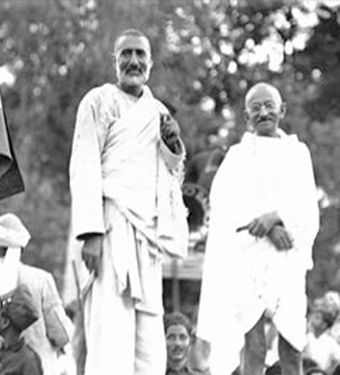
Ghaffar Khan died in 1988 at the ripe old age of 97. His dream of a peaceful, progressive home for Pathans lay in tatters as war waged between the Mujahideen and Communist Government in Afghanistan. In spite of forgetting his message of peace, Pathans turned up in lacs to bid farewell to their Badshah, who, in accordance with his wishes, was buried in Jalalabad In Afghanistan. The Mujahideen and the Communist forces, engaged in a relentless war, announced a ceasefire to allow the burial of this messenger of peace. Badshah Khan was a remarkable man and experts from the sub-continent and the West, whose disastrous policies in Afghanistan have contributed greatly to a vicious cycle of violence in the land, would be well-advised to draw lessons from the life of this extraordinary Gandhian. If he could lead the Pathans for years in a peaceful resistance then it is possible that many of the assumptions on which these policies are based may be wrong.
The President and the Captain
Many Pathans have made a mark in free India but to prevent this account from overstretching itself we briefly touch upon the lives of the Pathans who scaled the heights of the two most exalted peaks in India – Politics and Cricket.
Zakir Husain, the third President of India, came from a family of Afridi Pathans. His forefathers had migrated from Kohat in the Frontier to Qaimganj in present day Uttar Pradesh in the eighteenth-century. Zakir Hussain studied at the Islamia High School at Etawah and then went to the Mohammedan Anglo-Oriental (MAO) college, Aligarh (later to become the Aligarh Muslim University). He was an extraordinarily bright student besides being a good orator. Khilafat and Non-cooperation movement in the 1920s would initiate Zakir Husain into the world of politics. He became a devout follower of Gandhi. The Khilafat movement had surcharged the atmosphere at the MAO college and Zakir Husain, heeding the Congress call, left college like so many of his fellow students.
Some of the leading Muslim leaders of the Independence movement, with the active support of Gandhi, founded the Jami Milli Islamia University in 1920. Young Zakir Husain, too was active in the foundation of the University and was to become its Vice Chancellor upon his return from Germany where he pursued his PhD. While Zakir Husain held many exalted positions later this was perhaps his most important role. Jamia’s foundation years were very shaky and it was chronically short of funds. Zakir Husain according to his biographer “had to perform the work of private secretary, clerk, treasure and accountant”. He went about energetically raising funds for the University. The stakes in the success of the University were very high and Gandhi was particularly conscious of this. The creation of the University was not only seen as a way of providing modern education to Muslims but also a means of integrating them with the Independence movement. Zakir Husain’s energetic efforts paid off and Jamia flourished. He was to retire from the University in 1948 having served as Vice Chancellor for 25 years. He would subsequently become the Vice Chancellor of his alma mater, Aligarh Muslim University, for two terms.
Nehru thrust Zakir Husain into public office by appointing him the Governor of Bihar in spite of the latter’s reluctance. He was to become the Vice President in 1962, a post that he held with great distinction. The ultimate prize came in 1967 when he became the President of India. Elegant and erudite, handsome and dignified, Zakir Husain was perfectly suited for the high office that requires poise and dignity from its incumbent. He died in 1969, just 2 years into his Presidency, from a heart attack. Fleetingly, and in a somewhat ceremonial capacity, a Pathan would hold the highest office in India after a gap of nearly four hundred years.
Pathans would also leave their mark in the field of India’s most popular sport – cricket. The father and son duo of Iftikhar and Mansoor, hailing from the small princely state of Pataudi in the vicinity of Delhi, would both captain India. The Princely state was founded by Faiz Talab Khan in 1804. The State came to him as a reward from the British for supporting them against the Marathas. Iftikhar Ali Khan, the eighth Nawab of Pataudi, is the only cricketer to have played for both England and India. He debuted in the infamous England-Australia bodyline series of 1932 with distinction by scoring a century. The Prince it appears had a royal spine for he opposed the English captain Douglas Jardine’s controversial bodyline tactics. The spine, however, was to prove costly: he was dropped from the next Test. Iftikhar was to return to India later and captained the Indian team in 1946 in three tests.
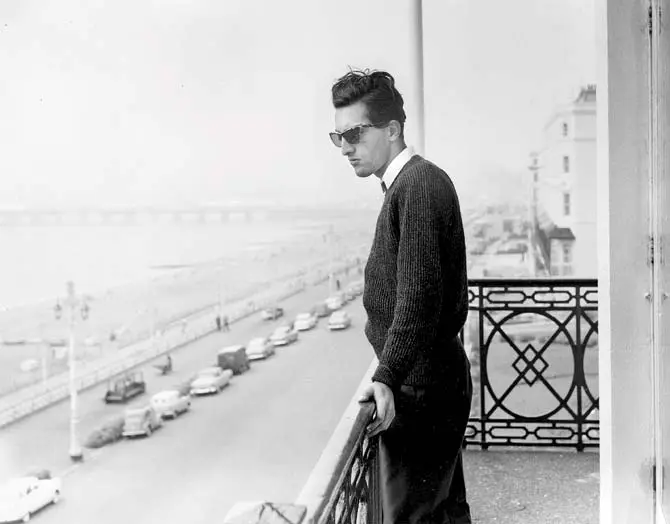
It was however his son Mansur “Tiger” Ali Khan Pataudi who was to acquire great fame. A car accident in England blinded him in one eye at the age of 20. A promising career seemed to have been cut short. But Tiger proved to be doughty: he is among the rare characters in sport who have played with distinction at the highest level in spite of such a handicap. Barely an year after the accident he was to become India’s youngest captain at the age of 21, and in a manner befitting a royal, captained India for much of his career (40 of the 46 matches he played in). India recorded its first overseas Test series victory, against New Zealand in 1967, under his leadership and he is regarded as one of the greatest Indian captains. Pataudi was a heartthrob of his generation and his appeal lay as much in his dashing regal looks as in his cricketing skills.
The heartthrobs of Bollywood
This brings us to the end of an account that breezed through the history of Pathans in India. We now turn to the explanation, promised in the first part of this series, for the presence of so many Pathans in Bollywood. Film Industries everywhere in the world lay a premium on good looks. Pathans appear especially blessed in this regard and this, in part, may explain their overwhelming presence in Bollywood. Khushal Khan Khatak, seventeenth century tribal chief and Pashtu’s greatest poet, whose poetry celebrates the beauty of Pathans and their lands, describes Afridi women in this poem, but this portrayal could perhaps apply to most Pathan women:
Fair and rosy are the Adam Khel maidens,
Among them are beauties of every type;
Large eyes they have, long lashes, and arched brows,
Sugar lips, flowered cheeks, and foreheads like the moon,
Tiny are their mouths as pouting rose-buds,
Their teeth are even and white,
Their skin so soft and glossy, and hairless as an egg-shell,
Their feet delicate, rounded the leg line and their hips magnificent,
Slender of belly, their breasts full and firm, and small waisted are they;
In stature straight as the letter Alif, and fair of colour ………”

He may well have been writing an ode to Madhubala, arguably Bollywood’s greatest beauty.
In the North-Western part of the subcontinent, the ultimate compliment to a man is to liken his looks to a Pathans. Khushal Khan describes men of his Khatak tribe thus:
“…… Stout and strong are its young men, nimble and active in all things,
Merry-eyed, fair and ruddy of countenance, tall in stature to behold; ……..”
Khatak’s portrayal of his tribesmen could well be a stereotypical description of the Pathan male. It seems the countless fans of Pathan superstars swoon over them for the looks that Khatak describes. The stature of the current crop of Bollywood Pathans, though, would have certainly disappointed Khatak. The other great home for celebrities in the sub-continent, cricket, has also had its fair share of Pathan heartthrobs – Tiger Pataudi, Salim Durrani, Imran Khan, Shahid Afiridi.
A colourful piece of the patchwork
India is a vast patchwork of people, communities, races, castes, tribes and religions stitched together over many centuries. It is like the patchwork shawl of a mendicant – worn out, rough, weather-beaten with fraying borders and threads that seem to be coming off. Yet it is beautiful. Each patch of the shawl has its unique character, colour and feel. And each patch has a story. Pathans are one small piece in this massive patchwork with their own story. The story is vibrant and adds colour to this fabric. It features emperors and presidents, statesmen and marauders, freedom fighters and mutineers, builders and wreckers, pacifists and warmongers, captains and adventurers, beauties and beasts, heroes and villains.
The most enduring creation of this story, and one that has literally touched all Indians, is of course the Rupee. The Rupee also holds a barely noticed but great irony. Gandhi, the very symbol of peace, rests calmly upon the creation of a fierce Pathan warrior-king: The Mahatma and the tiger-slayer locked in an immortal embrace.
*But we use the word Abdali as he is better known by this name in India.